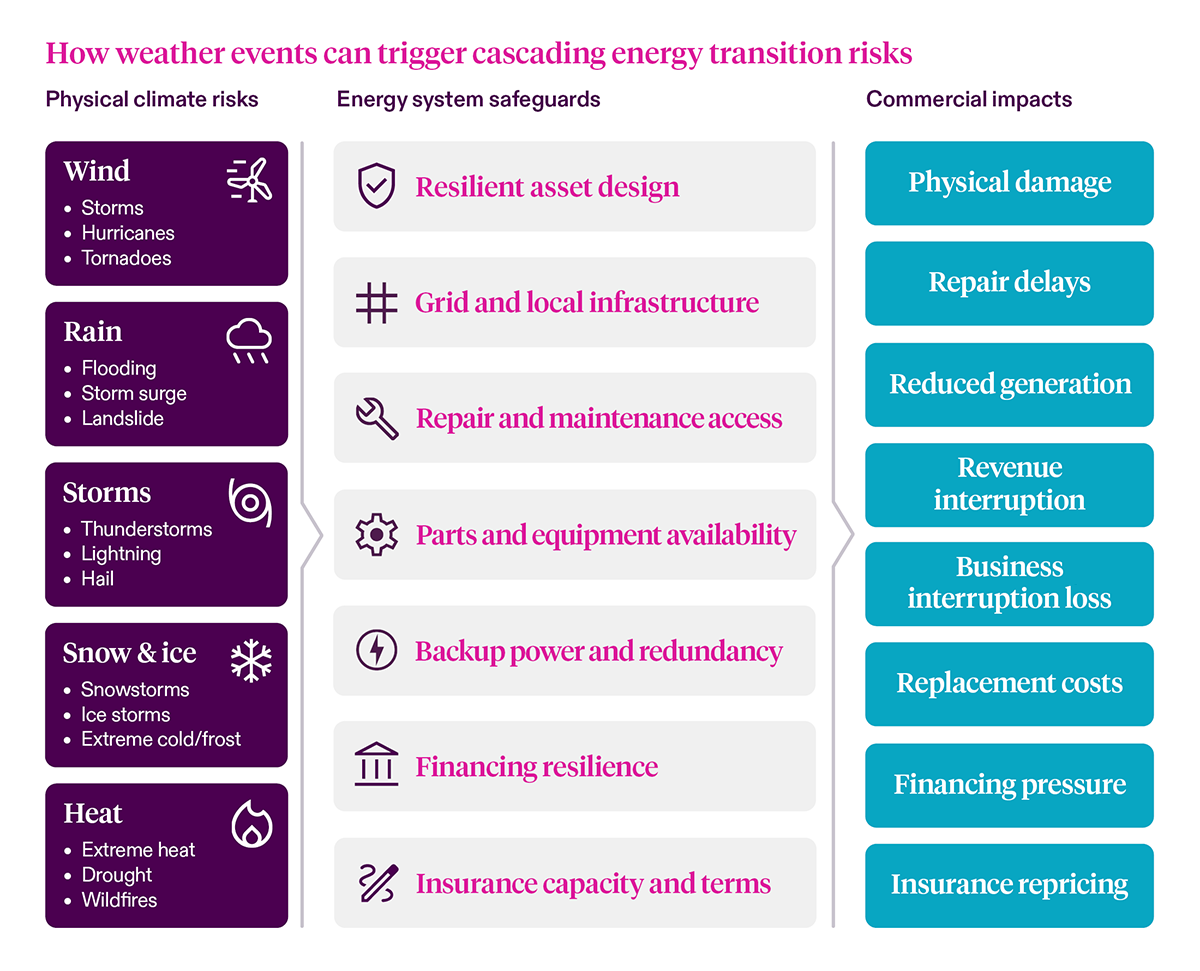
Renewable assets are built to use the elements. They now need to withstand them.

Extreme weather is driving larger and more frequent losses, with major storm events already triggering US$100m+ events across Texas, the Midwest and central US in recent years34These are capital-heavy assets with long lifespans. Revenue depends on continuous generation, so any downtime has a direct financial impact. When physical damage and lost output combine, losses escalate quickly.

As claims rise, insurers are tightening terms, increasing premiums and reducing capacity. This makes early risk planning essential. Developers need to understand exposure, model scenarios and decide where insurance is critical. Insurers and brokers can support this by combining loss data, forward-looking modelling and site-specific insights to improve resilience before events occur.

  • Hail is a growing threat to solar

    Hail is already one of the costliest insurance perils for solar projects35, and its severity is increasing. Many panels are not designed for today’s hailstorm conditions, which are more frequent and more extreme36.

    Damage is not always visible. Microcracks can reduce output over time, creating longer-term performance loss37

    In response, market guidance is adapting. Stronger panel design and automated positioning systems can help reduce exposure when hailstorms approach.

  • Fire risk starts within the asset

    Fire is the second major driver of loss at solar sites38, often linked to equipment rather than location.

    Common causes include inverter faults and poorly managed vegetation. Sites outside of high wildfire zones were the most hit by equipment-driven brushfires.

    Resilience depends on three factors: 

    • Equipment combustibility
    • Site design with fire spread in mind
    • Operational discipline around vegetation management, maintenance and emergency response preparation

    Maintenance and response planning are as important as location.

  • Lightning risk is rising for wind

    Blade strikes from lightning result in millions in annual losses due to damage and power interruption. As turbines get taller, lightning exposure increases39. This creates both physical damage and interruption risk.

    Newer turbines are more likely to trigger lightning due to their height and ‘upward lightning’ electrical profile, which can lead to more severe damage40.

    Insurance pressure is increasing, with tighter cover and more disputes. Operators need stronger detection, protection and recovery plans.

    From exposure to resilience

    Renewable projects need to be built for local conditions. This means designing assets that can withstand extreme weather and respond quickly when issues arise. Technology is helping. Sensors, AI and automation are improving fault detection, fire response and grid performance.

    Insurance plays a key role by helping map risk, quantify exposure and guide better design.

    Renewable risk is no longer just about generation. It is about whether assets can operate, recover and remain insurable in a more volatile climate.